Spanish 21: blackjack with no tens in the deck
Spanish 21 removes the four tens from every deck. That hurts the player, so the game adds generous rules and bonus payouts to compensate. This guide explains what changes and how the numbers compare with normal blackjack.
In brief
Spanish 21 uses 48-card decks without tens. Rules in the player's favour offset that, and under published analysis the house edge is about 0.40% when the dealer stands on soft 17.
The 48-card deck
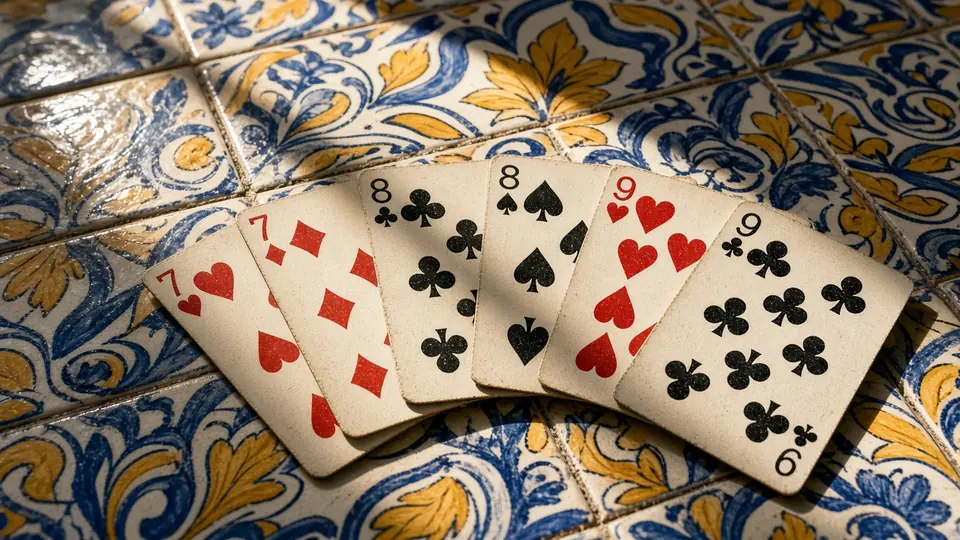
Spanish 21 is played with six or eight "Spanish decks". Each Spanish deck has 48 cards: a regular 52-card deck with the four tens removed. Jacks, queens and kings stay in, so there are still ten-value cards, but fewer of them.
Removing tens helps the dealer. Tens are the cards that make blackjacks and strong hands, and removing any ten-value card moves the odds in favour of the house. To compensate, the game gives the player a bundle of favourable rules.
Rules in the player's favour
Rules vary by table, but according to the Wizard of Odds the usual ones are:
- Late surrender allowed.
- Double after split allowed.
- Resplitting aces allowed.
- A player 21 always wins.
- A player blackjack beats a dealer blackjack.
- The player can double on any number of cards.
- The player can usually hit and double after splitting aces.
- The player can surrender after doubling ("double down rescue"), forfeiting an amount equal to the original bet.
Bonus payouts
Some or all of these pay extra, and they do not pay after doubling:
- A five-card 21 pays 3 to 2, a six-card 21 pays 2 to 1, and a seven-card (or more) 21 pays 3 to 1.
- A 6-7-8 or 7-7-7 of mixed suits pays 3 to 2, of the same suit 2 to 1, and in spades 3 to 1.
- A suited 7-7-7 against a dealer 7 may pay a "super bonus" at some casinos, with an "envy" payment to other players.
Most casinos do not pay these bonuses after a split, but the effect on the edge is very small, around 0.01%.
House edge
The Wizard of Odds gives these house edges, before counting the super bonus:
- Dealer stands on soft 17: 0.40%
- Dealer hits on soft 17 with redoubling: 0.42%
- Dealer hits on soft 17 without redoubling: 0.76%
If drawing to split aces is not allowed, the edge goes up by about 0.29%. So the rules matter again: at a table with all the favourable rules, Spanish 21 is competitive with the best ordinary blackjack. Strip a few of them away and it is worse.
The super bonus has little impact. The chance of landing it is about 1 in 668,382 with six decks.
Strategy differences
Spanish 21 has its own basic strategy, and it is not the same as ordinary blackjack strategy. For example, because of the player 21 rule and the removed tens, doubling and standing totals differ. One famous recommendation is to hit a three-or-more-card 17 against an ace. The same source argues that doing so saves about 2.8% of the initial wager. Use a chart for Spanish 21 matched to your dealer's soft-17 rule. The basic strategy chart on this site is for standard blackjack and does not apply.
Side bets
Match the Dealer is a side bet found in both blackjack and Spanish 21. You win if either of your first two cards matches the dealer's upcard. According to the same source, it has a house edge of about 3.06% with six decks and 2.99% with eight, far more than the main game.
Is it a good game?
At a table with generous rules, yes, as far as any casino game goes. But the lower edge depends on knowing the specific strategy and the bonus payouts do not make it a winning game. As with any variant, check the rules, avoid side bets and use limits from staying in control.
Quick answers
Is Spanish 21 played with Spanish playing cards?
No. It uses standard suits and ranks, with the tens removed, hence "Spanish decks".
Is it the same as British Pontoon?
No. In Australia and Malaysia Spanish 21 is called Pontoon, but British Pontoon is a different banker game.
Can I use normal basic strategy?
No. Use a chart made for Spanish 21 and the right soft 17 rule.
Keep reading
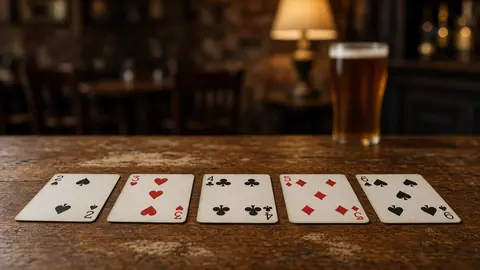 PontoonPontoon is the British version of twenty-one.
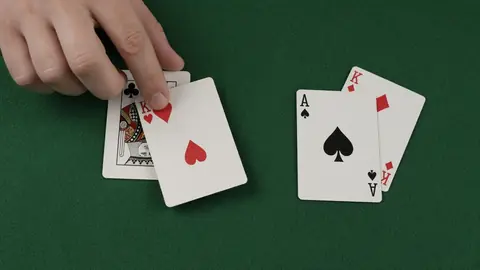 Blackjack SwitchIn Blackjack Switch you play two hands at once and may swap the top cards between them.
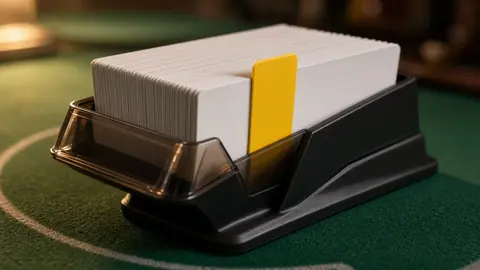 Table rules and decksTwo blackjack tables can look identical and have very different odds.
 House edge explainedThe house edge is the average share of each bet the casino expects to keep over the long run.